
The dynamics of nitrogen fixation in the Mozambique Channel on ice age and millennial timescales
 Abstract
A principal motivation for IODP Exp. 361 was to collect extended sediment sequences from sites that might capture the evolution of Agulhas Current leakage into the Atlantic. An essential component of this theme is the development of tracers that might delineate the unique characteristics of Agulhas Water. Here I propose to focus on one possible tracer: the isotopic composition of carbonate associated nitrogen (δ15N) in planktonic foraminifera. The Mozambique Channel has recently been identified as a hotspot for nitrogen fixation in the modern ocean; this process imparts a clear signature of low δ15N to the local surface ocean nitrate pool and, in turn, to the nitrogen retained within the CaCO3 lattice of foraminifera. I propose to document the dynamics of this nitrogen fixation signal over multiple timescales (anthropogenic, millennial, orbital) in IODP Exp. 361 Site U1477. This sediment sequence is ideally situated to test the relationship between the nitrogen fixation phenomenon and the hydroclimate variability of the adjacent Zambezi River watershed; it also features sedimentation rates of ~1 meter/kyr, allowing bi-decadal resolution of ocean variability over the last ice age interval. I propose to test a working hypothesis that changes in the strength of the nitrogen fixation signature, as reflected in the δ15N of planktonic foraminifera, were associated with changes in Zambezi River outflow variability over precessional timescales and over Heinrich Stadial Events. A fully comprehensive sampling of U1477 represents a multi-year pursuit, but the analysis plan here is designed to be tractable for a single year fellowship, informed by pilot analyses conducted earlier this year. Establishing the controls on the intensity of regional nitrogen fixation is important in its own right and is the principal focus of this proposal. However, the documentation of the dynamics of the nitrogen isotopic signal will also provide essential observations for assessing whether and how the nitrogen isotope tracer can serve as a monitor of past inter-ocean exchange.
Biography
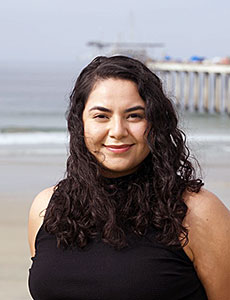
I am a first-generation Salvadorian American who grew up in South Central Los Angeles. My interest in paleoclimatology/paleoceanography stemmed from the interaction with the community of scientists in my alma mater, University of California, Irvine. They taught me how I could apply chemistry principles to understand our oceans. After I graduated with a B.S in Chemistry and Earth System Science, I went on to begin my journey in the doctoral program at UCSD, Scripps Institution of Oceanography. I am currently a Ph.D. candidate and am advised by Dr. Christopher Charles. During my time in the program my goal is to explore the multiple facets in which I can contribute to the field. The focus of my dissertation is exploring the evolution of the biogeochemical cycles during the last glacial cycle in the Mozambique Channel where I use paleoproxies such as radiocarbon, nitrogen, and radiogenic isotopes. My goal is to make significant contributions to the field while also allowing students who identify as underrepresented minorities to have access to the same space I partake in. I work closely with several organization and groups inside and outside the institution to share the current work I am doing and help these students envision themselves in the field. I hope that through the opportunity of receiving the Schlanger Fellowship I am able to continue providing valuable opportunities to aspiring scientists, while also continuing to pursue my areas of interest in paleoclimatology/paleoceanography.