
The surprising discovery of a double sulfate-methane transition in sediments of the Mediterranean Sea: Implications for carbon cycling in the deep biosphere
 Abstract
Sulfur is essential for life and is tied to major element (e.g., carbon) cycles and metabolisms. Sulfate reduction precedes methanogenesis during diagenesis, but in porewaters recovered during IODP Expedition 398, there is a second sulfate-methane transition above Messinian evaporites. This relationship suggests two sources of sulfate bracketing a methane- producing zone. Biological processes, volcaniclastic alteration, and brine migration can impact porewater chemistry and sulfate supply. Understanding their balance is crucial for characterizing deep biosphere ecosystems in the Mediterranean and the world’s oceans. Deeply sourced sulfate carries implications for microbial life and carbon cycling, including climate-impacting methane. This study will combine analytical and numerical approaches to characterize methane oxidation with multiple possible sulfate inputs.
Biography
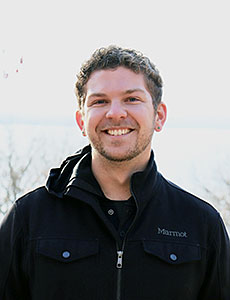
My first exposure to the geosciences was at my grandparents’ house at Lake Tenkiller in Eastern Oklahoma. Situated near the edge of the Ozark Plateau, the region is characterized by low mountains, oak forests, lakes, rivers, and, perhaps most importantly, fossils! Exploring this area sparked a keen interest in the Earth and its history that my family fostered for the rest of my life. I was fortunate to attend Oklahoma State University (OSU) for my B.S. in Geology and work with Dr. Natascha Riedinger, who introduced me to marine geochemistry. My passion for modern systems was cemented when I sailed on two oceanographic expeditions and designed independent projects to study trace metal cycling during early diagenesis. These expeditions ingrained in me the multifaceted nature of marine systems, particularly how microorganisms shape and are shaped by geochemical processes, while also introducing me to scientists around the world. Upon completing my degree at OSU, I moved to the University of California, Riverside to pursue my Ph.D. working with Dr. Timothy Lyons. My research focuses on iron, sulfur, and trace metal cycling in several modern systems with varying oxygen levels, degrees of restriction, and sediment sources. I sailed as an inorganic geochemist on IODP Expedition 398 to the Christiana-Santorini-Kolumbo Volcanic Field, and my Schlanger Fellowship project is an investigation of biogeochemical sulfate sourcing and cycling in these sediments.