
Seafloor Pockmarks and Their Role in Modulating the Release of Geologic Carbon Through Glacial Cycles – Chatham Rise, New Zealand
Date: June 9-10, 2026
Location: Corpus Christi, TX, USA
Workshop Contacts: Ingo Pecher (Texas A&M University Corpus Christi), Lowell Stott (University of Southern California), Lorna Strachan (University of Auckland), and Ewa Burwicz-Galerne (MARUM)
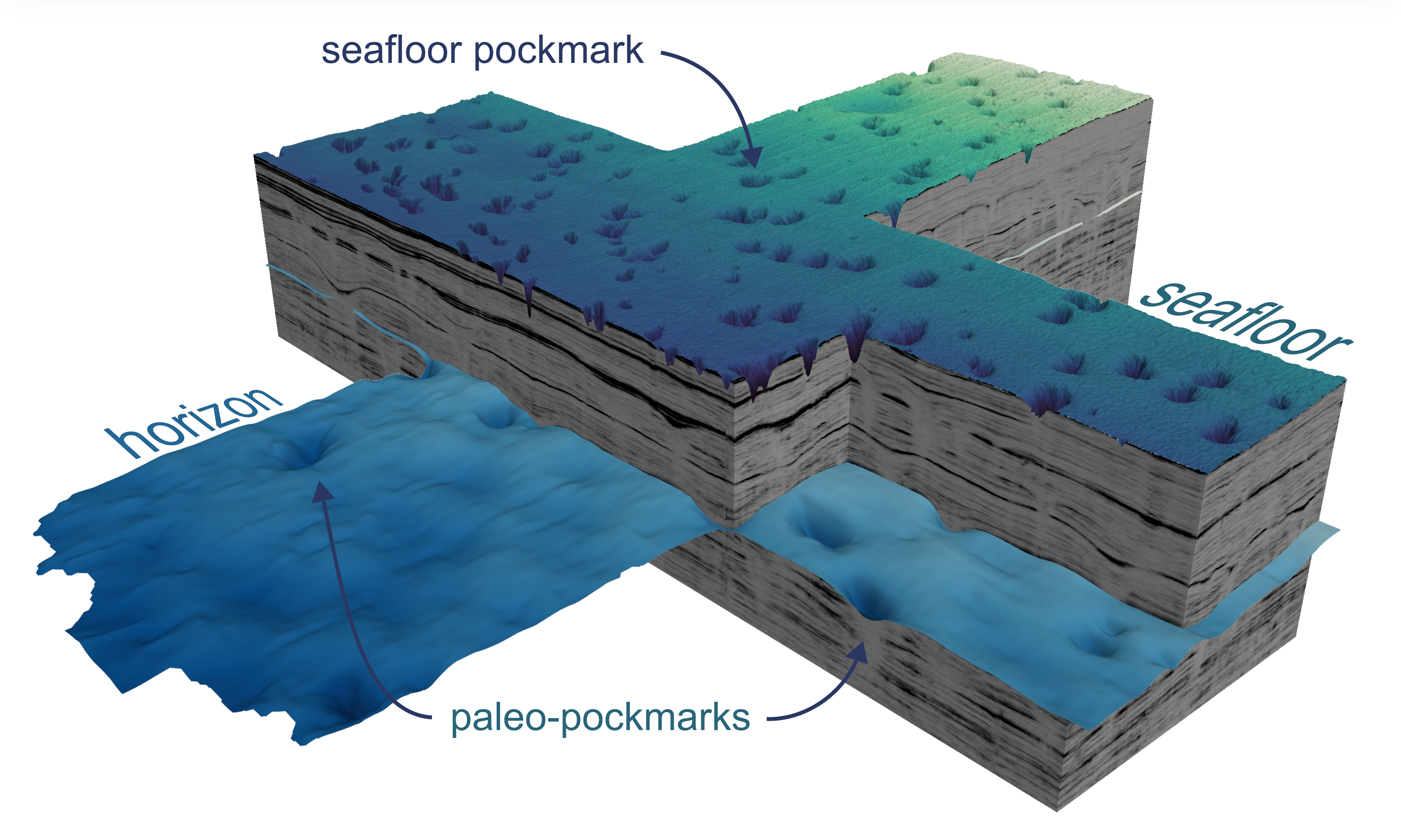
A vast area of the seafloor on the Chatham Rise east of New Zealand is covered by crater-like pockmarks. Sub-bottom profiler data show clear evidence that these pockmarks formed repeatedly around glacial-stage maxima. Large radiocarbon excursions observed in sediment cores suggest pockmarks formed by release of geologic carbon-rich fluids at the end of the last glacial period.
These observations support a novel hypothesis that pockmark formation modulated the release of geologic carbon to the ocean and thereby contributed to increased atmospheric CO2 concentrations during deglaciations. Validation of this hypothesis would be a paradigm shift from the prevailing hypothesis that does not incorporate geologic processes to explain atmospheric CO2 variations.
This workshop will bring together a diverse community of scientists to develop proposals for ocean drilling and accompanying site surveys. With this workshop, we intend to kick-start a comprehensive science program that will illuminate the role of geologic mechanisms in affecting atmospheric CO2 concentrations on glacial/interglacial timescales.
Participation
U.S. based scientists please contact Ingo Pecher or Lowell Stott if you have questions. To apply for workshop support (through the U.S. Science Support Program), please submit the following documents to this form, or e-mail them to Ingo Pecher by March 8, 2026:
- Statement of interest and motivation
- CV
- For students, letter of support by committee chair
We strongly encourage scientists from IODP3 member countries to join in the workshop. For potential support options, please contact:
- Lorna Strachan (Australia, New Zealand)
- Ewa Burwicz-Galerne (ECORD member countries)
- Please contact Ingo Pecher for other countries
Special consideration will be given to early- to mid-career scientists.
Preliminary Agenda
MONDAY, June 8: Arrival and ice breaker
TUESDAY, June 9: Plenary science sessions
Morning
- Welcome
- Release of geologic carbon through glacial cycles
Afternoon
- The Hikurangi Plateau and Chatham Rise
- Seafloor pockmarks
- Poster session
WEDNESDAY, June 10: Discussion and Breakout Sessions
Morning
- Plenary discussion: Open questions, pre-drilling studies, and drilling strategies
- Breakout sessions
Afternoon
- Plenary session: Reports from breakout sessions
- Synthesis and the way forward
Questions?
For further information on the workshop, please contact:
- Ingo Pecher, Texas A&M University Corpus Christi, TX, USA, [email protected]
- Lowell Stott, University of Southern California, Los Angeles, CA, USA, [email protected]
- Lorna Strachan, University of Auckland, New Zealand, [email protected]
- Ewa Burwicz-Galerne, MARUM, U. Bremen, Germany, [email protected]